Start with the scoop, not the plant count
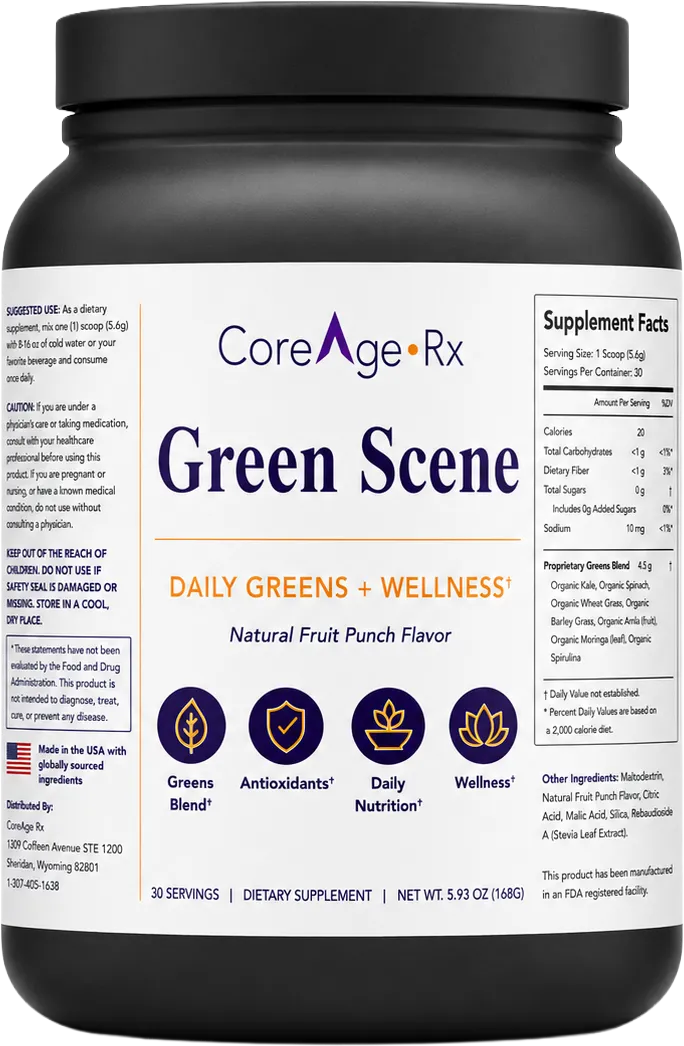
The inspected bottle label describes a 5.6g scoop and 30 servings. Within that serving, a proprietary organic greens blend weighs 4.5g. The listed plants are kale, spinach, wheatgrass, barleygrass, amla, moringa and spirulina. The combined blend weight is disclosed; the amount of each plant is not. Dividing 4.5g by seven would invent equal amounts the label never promises.
This distinction changes how you read ingredient research. A study using a particular quantity of one plant does not establish the result of this seven-plant mixture. Even a familiar ingredient name needs context: plant part, preparation, amount, study population and measured outcome. We did not establish a clinical trial of the exact finished Green Scene formula from the materials inspected.
The nutrition panel lists 20 calories and less than 1g dietary fiber per serving. A 4.5g greens blend is therefore not a declaration of 4.5g fiber. Our powder-versus-vegetables guide explains why a plant count and a fiber amount belong in different parts of your comparison.
Organic ingredients do not answer every question
The blend's plant ingredients are described as organic. We did not independently verify certification of the finished bottle. That is a limit of this review, not an allegation about the company's labeling or a claim that certification does not exist. If finished-product certification matters to your purchase, request the certifier and the record that matches the exact product.
USDA distinguishes different uses of organic language, including claims about individual ingredients and claims about the finished product. None of those categories, on its own, demonstrates improved digestion, increased energy or suitability alongside your medicines. The organic-label guide helps separate the certification question from the health question without treating either as a shortcut for the other.
The other-ingredients list also matters. The inspected image names maltodextrin, natural fruit-punch flavor, citric acid, malic acid, silica and Rebaudioside A from stevia leaf extract. Describing this as a seven-ingredient product with no other ingredients would be inaccurate. A reader comparing sweeteners or flavor ingredients should examine that full list, not just the green blend box.
Keep the price wording intact
The product page's starting price is $29 per bottle. It should not become a verified $29 monthly subscription in a review. Thirty servings describe the container; they do not prove a particular shipment interval, renewal date or cancellation arrangement. We did not complete checkout and did not verify the final shipping charge or total for a specific address.
Before paying, make a small order record: chosen quantity, amount due now, shipping, tax, whether future orders are enabled, next billing date and how cancellation works. Those are ordinary buying details, but they can change the comparison more than a headline price. A screenshot of a promotional banner is not a substitute for the terms beside the payment button.
Our best-of comparison keeps CoreAge first as sponsored placement. It also preserves this unresolved order information. We do not assign a value score by treating an advertised starting price as a complete delivered cost, and we do not silently add prescription-program benefits to a supplement purchase.
Manufacturing language and product evidence
CoreAge's page describes manufacturing in the United States with globally sourced ingredients and references an FDA-registered facility. Facility registration is not FDA approval of Green Scene. FDA explains that dietary supplements do not receive the same premarket approval process as drugs. A company statement about its facility also does not establish the contents of a specific bottle independently.
A useful testing document would identify the product and lot, explain which substances or organisms were checked, show the methods and results, and identify the laboratory. We did not verify that complete chain for a purchased Green Scene bottle. That does not prove testing is absent; it means this publication cannot turn a general manufacturing statement into a verified batch result.
Moringa appears in this formula. Our discussion of another brand's named recall must not be read as either implicating or clearing this product. Recall scope is product-specific. The recall guide shows how to follow the named record without assuming that every product containing an ingredient shares the same status.
What to bring to a health professional
The most useful item is the complete current label, alongside your medicines and other supplements. An ingredient's presence does not establish a clinically important interaction for every person; an unlisted nutrient amount does not establish zero exposure. Questions involving anticoagulants deserve the specific distinction made in our vitamin K and medicines guide.
Green Scene is presented here as an optional supplement, not a meal, a treatment for symptoms or proof that vegetables can be removed from a diet. Its short plant list can make some label questions easier to frame. The missing individual weights, unverified final order terms and unverified exact-batch evidence remain part of the review. Sponsored placement does not resolve any of them.
Consider the rest of the routine
The nutrient-overlap guide explains why a short plant blend should not be assumed equivalent to a multivitamin or free of unlisted micronutrients. Before laboratory appointments, our biotin and test-preparation guide helps organize the full supplement list without inventing a universal stopping interval. These questions apply to the sponsored product as well as alternatives.