Interference is not the same as a change in health
A test can be affected because a substance interferes with how the measurement works, rather than because the underlying health condition changed. FDA guidance identifies biotin interference as a concern for certain laboratory assays. The direction and significance of the error depend on the test involved.
The FDA has reported falsely low troponin results associated with biotin interference in susceptible assays. Troponin testing can be important in evaluating possible heart injury. That makes accurate supplement disclosure clinically relevant, but it does not mean every test system or every person taking a biotin-containing product will have a false result.
NIH also discusses possible effects on tests that measure certain hormones, including thyroid-related tests. A result should therefore be interpreted by the clinical team with the relevant history and laboratory information. Do not decide that an abnormal result must be “just the greens” or that a reassuring result makes symptoms unimportant.
Find the amount without losing the unit
The expanded US AG1 Next Gen panel we inspected lists 330 mcg biotin per serving. Huel’s US Daily Greens formula table lists 8.8 mcg. These are label observations, not findings that either product will interfere with a particular patient’s tests. The actual test method, intake, timing, and circumstances still matter.
Write the unit exactly. Micrograms are often abbreviated mcg, while milligrams are abbreviated mg; 1 mg equals 1,000 mcg. A separate hair-and-nail supplement may use a different unit from a greens powder. Copying only the number can make the combined record misleading.
Our AG1 review and Huel review identify the reviewed formulas. If a new bottle has a different panel, show that panel instead of relying on an article’s older screenshot or a similarly named product. A label value is a product detail, not a universal laboratory threshold.
Bring the whole routine, including occasional products
A useful list names every supplement and medicine, the amount actually used, how often it is taken, and when it was last taken. Include powders, drops, gummies, energy products, and occasional beauty supplements. The clinician cannot account for a product that was left off because it does not look like a pill.
Photographs of complete labels can be easier to review than a list of brand names alone. Keep the serving size visible and distinguish a labeled serving from a different amount actually used. If the amount is uncertain, say that instead of inventing a precise estimate.
The supplement-overlap guide helps organize that inventory. Its purpose is to make the conversation clearer, not to add up a number and declare a blood test safe or unsafe. There is no universal conversion from a combined label total to the result of every laboratory assay.
Ask the ordering team before choosing a hold period
Contact the clinician or laboratory responsible for the test and ask whether the listed supplements affect preparation. Share the test being ordered if it is known, the exact products, and any instructions already provided. Different tests and clinical situations may need different handling.
We do not publish a blanket instruction to stop a greens powder for a fixed number of hours or days. Such a rule could be inappropriate for the assay or person, and it could conflict with a healthcare professional’s plan. It is particularly important not to stop a prescribed nutrient treatment or medicine solely because of a general supplement article.
If the team gives specific instructions, record which product they concern and when normal use can resume. Fasting directions and supplement directions are not necessarily the same question. Ask for clarification if an instruction about food leaves uncertainty about the powder or another product.
If a product was already taken, provide the facts
For a planned test, tell the ordering team that the supplement was taken and give the approximate time and amount. The team can decide whether the test method, timing, or interpretation needs adjustment. Do not conceal the information because the appointment is already booked, and do not independently assume the test must be canceled.
Urgent symptoms are a different situation. Do not delay seeking emergency assessment while waiting for a supplement to leave the body. Tell the treating team about the product as part of obtaining care. A possible interference issue belongs in the clinical assessment; it is not a reason to wait at home or dismiss symptoms.
If a previous result seems inconsistent with symptoms or another test, mention the supplement history to the clinician. The next step may involve checking the assay or repeating a measurement, but that decision should come from the professionals interpreting the result rather than from an online review.
An absent label line is not a laboratory clearance
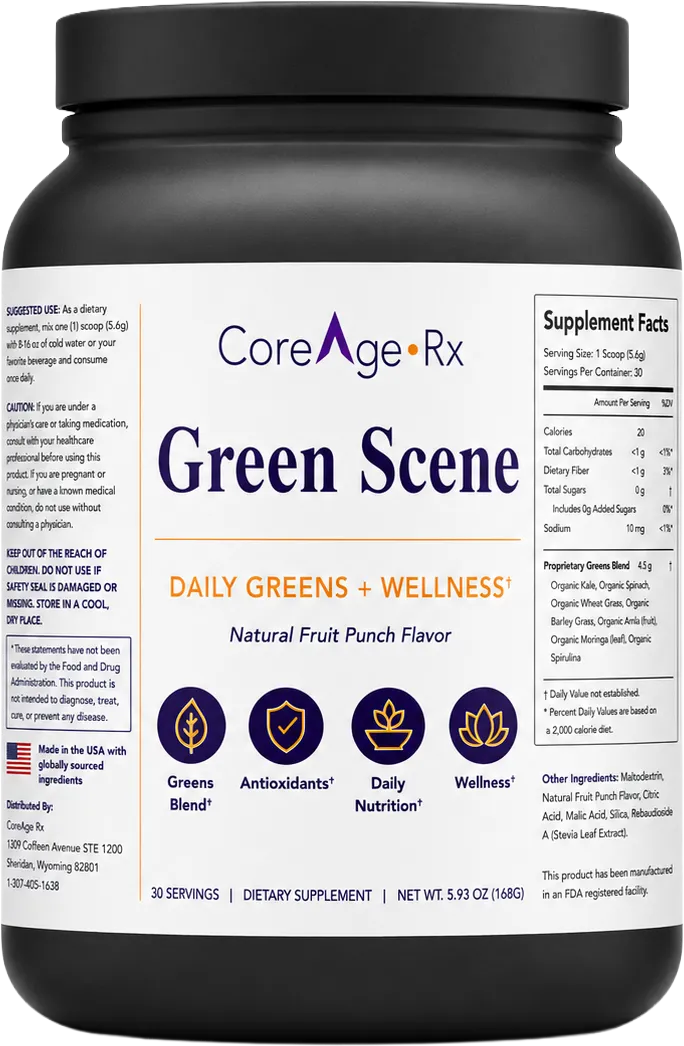
The CoreAge Rx Green Scene review describes the limits of its separately stated nutrient information. The absence of a biotin entry on a reviewed label does not establish a tested zero amount or certify the product as compatible with every laboratory method.
Likewise, a short ingredient list does not replace the clinic’s preparation instructions. Disclose the whole product even when the concern that prompted the appointment is unrelated to nutrition. The clinical team can decide which details are relevant.
The most useful outcome is a concise, accurate supplement record and a clear instruction from the people responsible for the test. Keep the product, amount, unit, and timing together. That supports a better interpretation of laboratory information without turning a greens-powder article into a diagnosis or a personal testing protocol.