Read beyond a standalone caffeine line
FDA guidance explains that caffeine may occur naturally within an ingredient, so a product can contain a caffeine source without listing caffeine separately as an added ingredient. The practical task is to read the whole ingredient list, including mixtures and extracts, instead of stopping when the word caffeine is absent.
Tea is a useful example because the ingredient description can range from a leaf powder to an extract with particular processing or specifications. The weight of that ingredient is not its caffeine weight. A gram of a tea-containing blend cannot be entered as a gram of caffeine, nor can it be converted using a typical cup-of-tea estimate.
Our Nested Naturals Original review identifies green tea extract in a mixed botanical section without a separately declared caffeine amount. This is an information gap, not a finding that the powder contains a dangerous amount or that it contains none.
A product page can answer a different question from its label
The Huel Daily Greens formula explanation names green tea, green coffee bean, and mate extracts within its greens blend. Ingredient identification helps formulate a question, but those names alone do not establish a measured caffeine total for the finished serving. Our Huel review keeps the selected US Original powder separate from Huel’s other products.
A useful request to a manufacturer is: what is the total caffeine per labeled serving of this exact flavor and formula, including naturally occurring sources? Ask whether the answer is a specification, an estimate, or a test result. These descriptions convey different levels of certainty.
If the company supplies a value, keep its units and serving basis attached. A value per 100 g is not a value per scoop. A statement about one flavor or an earlier formula should not silently become a statement about every product sold under the same brand name.
Energy language is not a caffeine measurement
A page may use energy to describe nutrition, alertness, exercise performance, or a general feeling of wellness. Those are different ideas. The word does not prove that a product contains caffeine, and a claim of energy without jitters does not quantify the caffeine that may be present.
A manufacturer’s explanation that vitamins support normal energy metabolism also does not establish an immediate stimulant effect. When reading a review, separate the product’s nutrient information from claims about how it will feel. We do not interpret customer descriptions of feeling energized as a laboratory analysis of the powder.
The guide to combining supplements addresses the nutrient side of that distinction. It is possible to need information about both vitamins and caffeine, but one answer cannot substitute for the other.
Count sources across the day without inventing missing values
Coffee, tea, energy drinks, some supplements, and some nonprescription medicines can all contribute caffeine. FDA guidance emphasizes total intake across sources, including naturally occurring and added caffeine. A greens powder should not disappear from that review simply because it is consumed in a breakfast smoothie rather than an energy-drink can.
Make a short list of the products and the amounts actually used. Record a verified caffeine value where one is available and mark the remaining entries unknown. An honest incomplete total is more useful than an apparently exact number assembled from unrelated beverage averages.
For instance, a powder’s unknown tea-extract contribution cannot be replaced with the caffeine amount in an ordinary brewed tea. The preparation, portion, and ingredient specifications may differ. If the unresolved amount matters because a clinician has advised a limit, obtain product-specific information before treating the estimate as an answer.
A population reference is not a personal allowance
The FDA cites 400 mg a day as an amount not generally associated with negative effects for most adults, while stressing wide differences in sensitivity and elimination. This is context, not a target or a remaining allowance to fill with another supplement.
Medicines, medical conditions, pregnancy-related circumstances, and individual responses can change the discussion. Being over 50 does not create one universal caffeine limit, just as being younger does not guarantee tolerance. Ask the clinician who knows the relevant history rather than calculating permission from a general article.
Symptoms such as sleep disruption, jitteriness, or palpitations deserve attention in that conversation. Do not assume that an unfamiliar reaction must be caffeine, however; greens formulas can contain many other ingredients. New or concerning symptoms need appropriate assessment rather than a self-diagnosis based on the latest purchase.
Keep a claim, an assay, and suitability separate
A caffeine-free statement is a manufacturer claim unless its supporting evidence has been examined. A test result, when available, still has a particular product, lot, method, and reporting limit. Neither a claim nor a measurement alone tells a reader whether every other ingredient fits their medicine list or health circumstances.
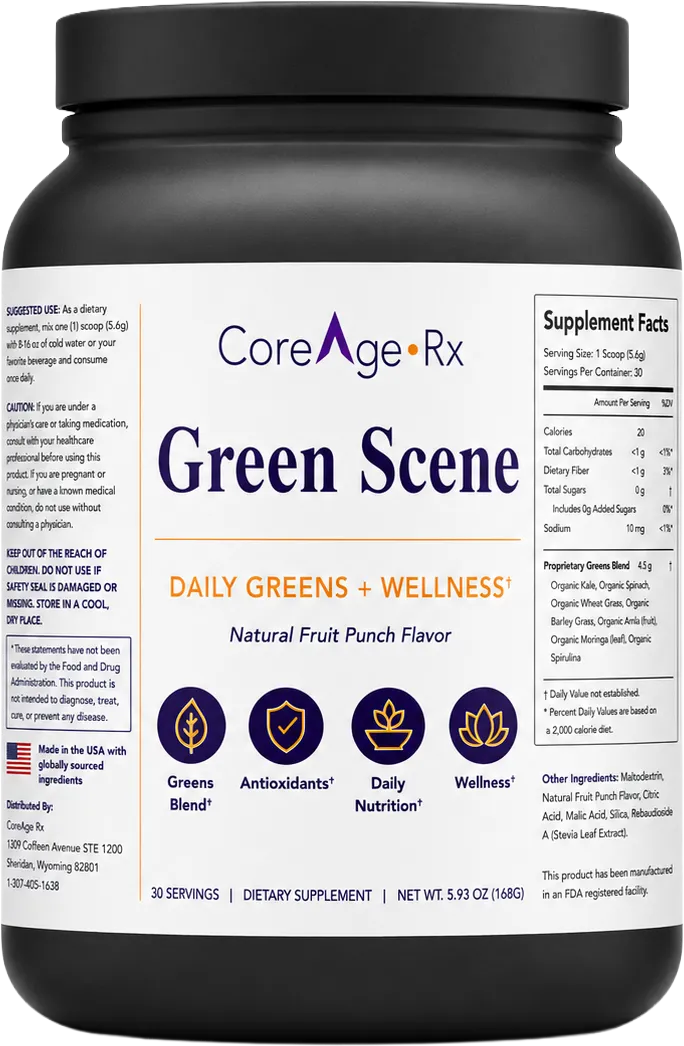
The Green Scene review documents a shorter plant list, but we have not independently assayed that finished product for caffeine. A shorter list should not be converted into an unsupported zero-exposure claim. The same evidence rule applies to the sponsor and the alternatives.
Keep the final buying note practical: exact product, labeled serving, known caffeine amount or unresolved question, and the reason that information matters. If the seller cannot supply a clear answer, retain that uncertainty in the decision. An attractive greens label should make the question easier to ask, not make it disappear.